Road safety products for distributors, contractors and government projects

WhatsApp: 008618662728327Language: Colse EnglishEnglish

Contact
WhatsApp

Get a quotation

008618662728327

Top

Highway Guardrail Installation: Components, Process and Buyer Checklist

Release date:2023.07.30
Abstract:
A practical overview of highway guardrail components, installation steps, inspection points and the information buyers should provide for an accurate project quotation.

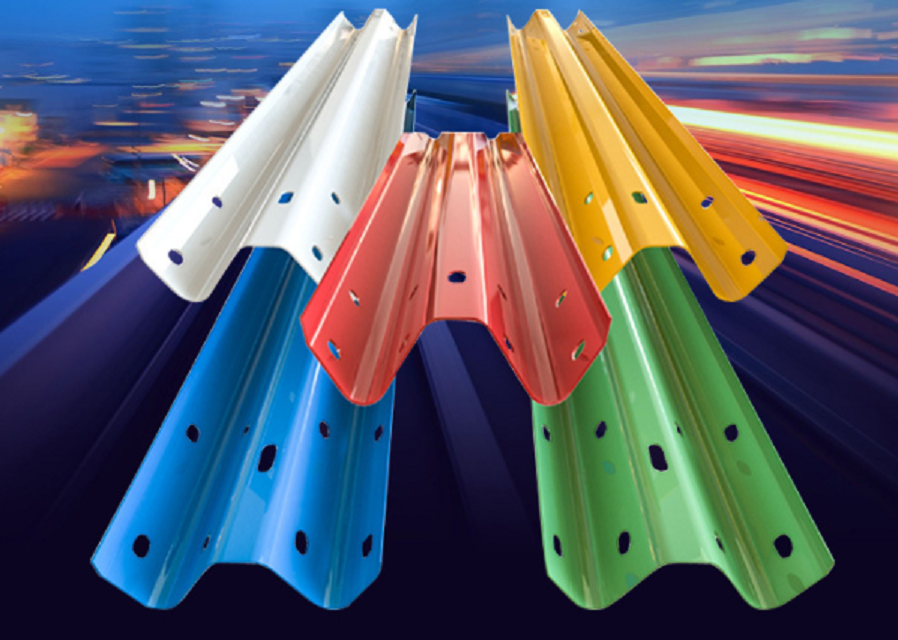
Highway guardrail is a complete roadside safety system rather than a single steel beam. The beam profile, posts, spacers, terminals, fasteners, coating and installation geometry must work together according to the project design and applicable local standard.

This article provides a general purchasing and installation overview. Final design, installation spacing and acceptance requirements must always follow the project drawings, engineering assessment and regulations in the destination market.

Typical Guardrail System Components

  • Corrugated steel guardrail beams

  • Steel posts and post caps

  • Spacers or blockouts

  • Bolts, nuts, washers and connectors

  • End terminals and transition sections

  • Reflectors and delineation accessories
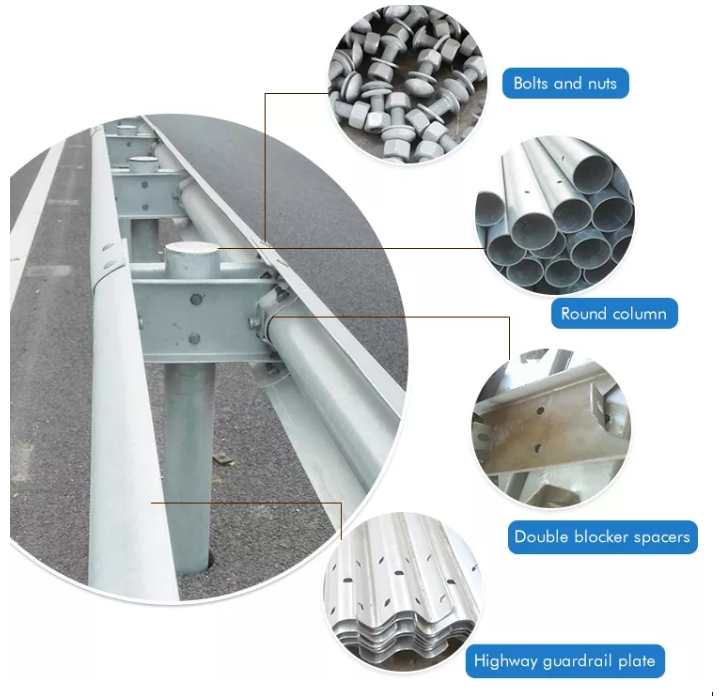
Galvanized highway guardrail components

General Installation Process

1. Review the Project Design

Confirm the required beam profile, material thickness, coating, post type, post spacing, rail height, terminal design and total length. Curves, bridges, culverts and transition areas may require special components.

2. Survey and Mark the Installation Line

Check the road alignment, shoulder condition, underground services and obstacles. Mark post positions according to the approved drawings. Installation should not begin until conflicts with drainage, utilities and structures have been resolved.

3. Install and Align the Posts

Posts may be driven, placed in prepared holes or installed using another approved method depending on soil conditions and project requirements. Alignment, verticality, embedment and spacing should be checked before the beams are fully tightened.

4. Assemble Beams and Hardware

Install the beams in the correct direction and sequence specified by the design. Use the approved bolts, washers, spacers and connection details. Damaged coating and incorrectly installed hardware should be corrected before acceptance.
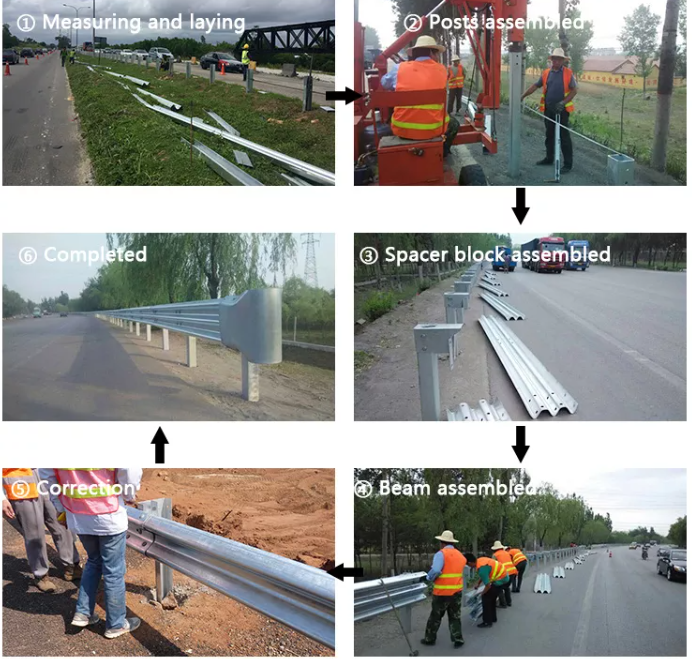
Highway guardrail installation process

5. Complete Terminals and Transitions

End terminals and transitions are critical system elements. They should match the approved design and be installed by trained personnel according to the applicable instructions and project standard.

Inspection Points

  • Beam profile, thickness and coating match the approved specification.

  • Post type, spacing, embedment and alignment are correct.

  • Rail height and distance from the roadway follow the drawings.

  • Bolts and connection hardware are complete and correctly installed.

  • Terminals, transitions and reflectors match the approved system.

  • Transport or installation damage has been identified and addressed.

Information Required for a Guardrail Quotation

Provide the destination country, applicable standard, beam profile, steel thickness, coating requirement, post and spacer type, post spacing, total length, terminal quantities, drawings and destination port. If the specification is incomplete, clearly identify which items require technical confirmation before pricing.

View highway guardrail products or send your project specification.
Highway guardrail is a continuous structure made of corrugated steel guardrail plates made of galvanized steel plate splicing each other and supported by the main column, and its surface is covered with a layer of anti-rust paint to ensure its long-term use. When the vehicle collides with it, the waveform design of the corrugated guardrail can provide greater energy absorption, reduce the impact force of the vehicle in the collision, and thus reduce the severity of the accident. The design of highway guardrail plate must follow the efficient and scientific concept, provide protection for people's safe travel, and strive to prevent traffic accidentsHigh-speed guardrail engineering mainly includes guardrail , guardrail post, guardrail spacers and other accessories.

1665673122028.png

In order to improve the safety of the guardrail, the standards of the highway guardrail are as follows:

1. Guardrail height: the height of the highway guardrail should not be less than 70cm to ensure the safety of the vehicle.

2. Guardrail column: guardrail column should be solid and reliable, the diameter is not less than 130mm, the spacing is not more than 4m, and the buried depth under the column is not less than 60cm.

3. Guardrail plate: guardrail plate should be solid and durable, thickness is not less than 3.0mm, width is not less than 310mm, length is not less than 4320mm.

4.Guardrail connectors: guardrail connectors should be solid and reliable, and unqualified connectors should not be used to ensure the firmness and stability of the guardrail.

5. Guardrail color: The color of the highway guardrail should be eye-catching yellow or white, so that the driver is easier to identify and alert when driving.

6. According to different road needs, we can choose different guardrail plate shapes, expressway choose three-wave guardrail, the rest of the low-speed road choose double-wave guardrail.

1665673198152.png

The highway guardrail produced by our company is aesthetically pleasing, while increasing the strength of the fence, both; Extruded by automatic production line, clean surface without damage, strong anti-corrosion; Mature surface treatment; Anti-corrosion, anti-aging, anti-sun, high and low temperature resistance, outdoor environment service life of up to 10-25 years; The product structure is simple, beautiful and practical, easy to transport and install, good anti-theft performance, limited by the actual terrain, especially strong adaptability for mountains, slopes, multi-curved areas, moderate cost, suitable for large area use.


Etonda Traffic Safety
Highway Guardrail Installation: Components, Process and Buyer Checklist

Highway Guardrail Installation: Components, Process and Buyer Checklist

A practical overview of highway guardrail components, installation steps, inspection points and the information buyers should provide for an accurate project quotation.
2023-07-30
Collapsible Traffic Cones: Features, Uses and Buying Guide

Collapsible Traffic Cones: Features, Uses and Buying Guide

Learn where collapsible traffic cones work best and how to compare folded size, base stability, reflective bands, warning-light compatibility and packaging.
2023-05-14
Road Marking Machine Types: How to Choose the Right Equipment

Road Marking Machine Types: How to Choose the Right Equipment

A practical guide to cold paint machines, thermoplastic marking machines, preheaters and line removal equipment for road and parking projects.
2023-03-09
Traffic Safety Product Trends for Distributors and Contractors

Traffic Safety Product Trends for Distributors and Contractors

Six purchasing trends affecting traffic safety distributors and project contractors, from landed cost and customization to documentation and container efficiency.
2023-03-09
Traffic Cone Types: Materials, Sizes and Buying Guide

Traffic Cone Types: Materials, Sizes and Buying Guide

Compare PVC, rubber-base PVC, PE and collapsible traffic cones. Learn how size, base weight, reflective collars and application affect purchasing decisions.
2023-03-09

Contact us

  • Whatsapp:008618662728327
  • Whatsapp:008613182944931
  • Email:info@etonda-trafficsafety.com
  • Address:Nanjing