
Road safety products for distributors, contractors and government projects
WhatsApp: 008618662728327Language:
 English
Road safety products for distributors, contractors and government projects
WhatsApp: 008618662728327Language:
English
Traffic cones are often used outdoors for road construction, maintenance, parking control, and temporary traffic management.
In hot and sunny locations, prolonged exposure to sunlight and elevated temperatures may affect some material formulations.
Potential concerns include:
Color fading
Reduced flexibility
Loss of shape at elevated temperatures
Poor bending recovery
Surface changes
Premature material degradation
These problems do not occur in every product. Actual performance depends on material formulation, manufacturing quality, product design, and exposure conditions.
Prolonged UV exposure can affect the color and physical properties of some traffic cone materials.
When selecting products for outdoor use, buyers should ask suppliers about their material options and any relevant weathering test results.
Important considerations include:
Color retention
Surface condition after exposure
Changes in flexibility
Reflective sheeting durability
Consistency between production batches
A supplier's UV-resistance claim is more useful when supported by documented test conditions and results.
Traffic cones may bend under handling, accidental impact, or vehicle contact.
A suitable product should recover as intended after deformation under its specified operating conditions.
Poor recovery may leave the cone leaning, folded, or permanently deformed. This can affect its practical use and may require replacement.
Buyers should ask whether bending recovery has been evaluated using a defined procedure.
For meaningful comparisons, the test should specify the deformation method, environmental conditions, recovery period, and acceptance criteria.
Some traffic cones may experience repeated compression or accidental vehicle contact during road maintenance and construction work.
A product that performs well during a single bending demonstration may not behave the same way after repeated cycles.
For applications involving repeated vehicle contact, ask suppliers about:
Repeated compression or bending tests
Recovery after each cycle
Cracking or tearing
Permanent deformation
Performance after environmental conditioning
There is no universal compression-cycle count that guarantees suitability for all applications. Buyers should agree on relevant test methods and acceptance criteria before ordering.
Weight can influence stability and handling, but it is not the only factor affecting performance.
A lightweight cone may be easier to move but may be more susceptible to displacement under some conditions. A very heavy cone may increase worker handling effort.
For hot-climate applications, buyers should evaluate weight together with:
Cone height
Base dimensions
Weight distribution
Material formulation
Temperature performance
Bending recovery
Intended operating conditions
The right configuration should balance stability, worker handling, and durability.
Traffic cones can develop visible changes such as whitening, permanent creases, cracking, or an oily surface.
These signs may be associated with material stress, formulation, processing, or environmental exposure.
Excessive or unsuitable mineral fillers may contribute to poor flexibility or recovery in some formulations, but the use of calcium carbonate alone does not prove that a product is defective.
An oily surface may indicate plasticizer migration or another formulation issue. The exact cause should be established through inspection and testing.
For importers, a practical approach is to evaluate samples under agreed conditions and document the results before approving a bulk order.
Before selecting traffic cones for hot and sunny locations, confirm:
Required height, weight, and base dimensions
Suitability for the intended operating temperature
Available UV or weathering test information
Bending recovery performance
Repeated compression performance where relevant
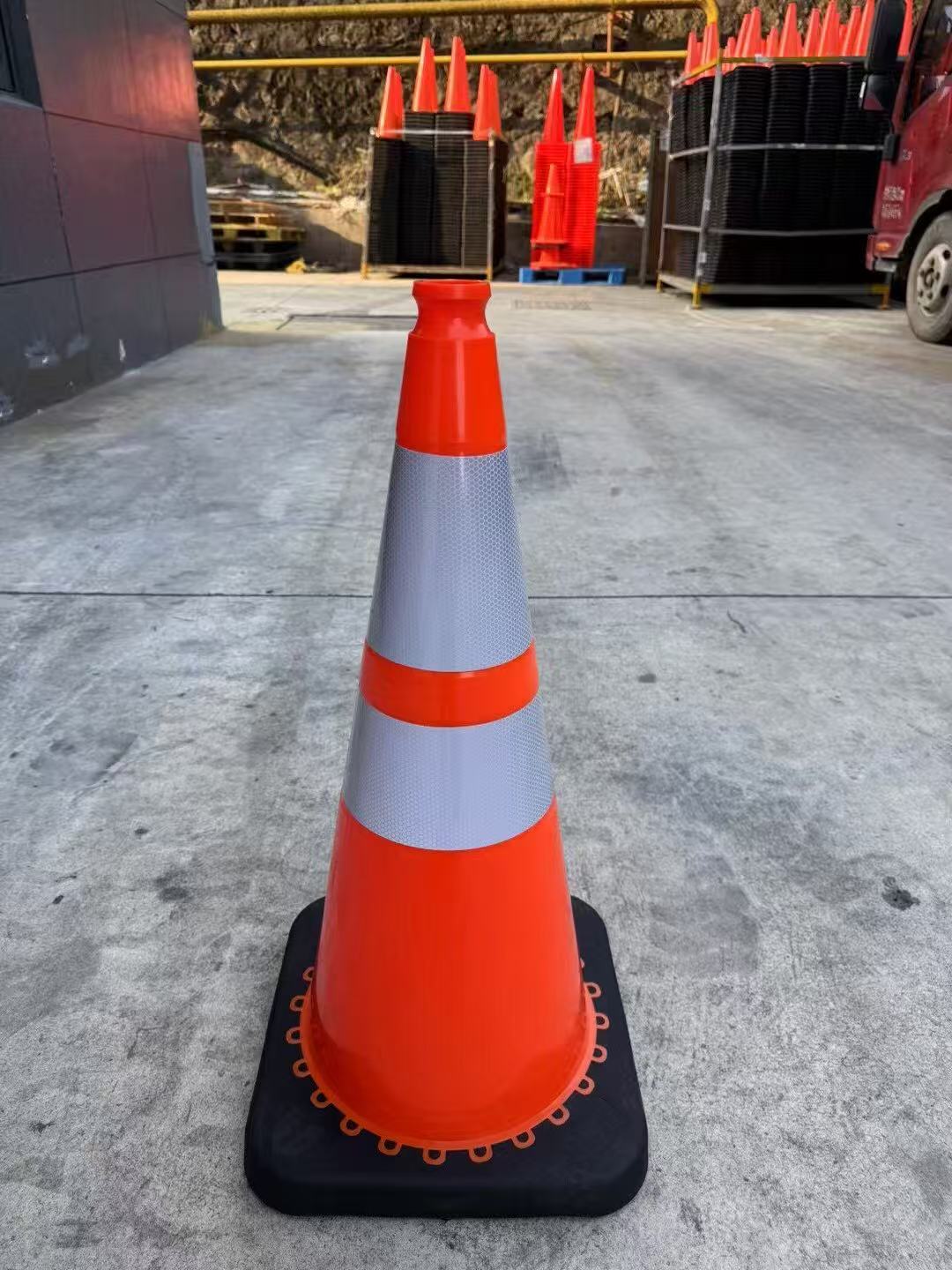
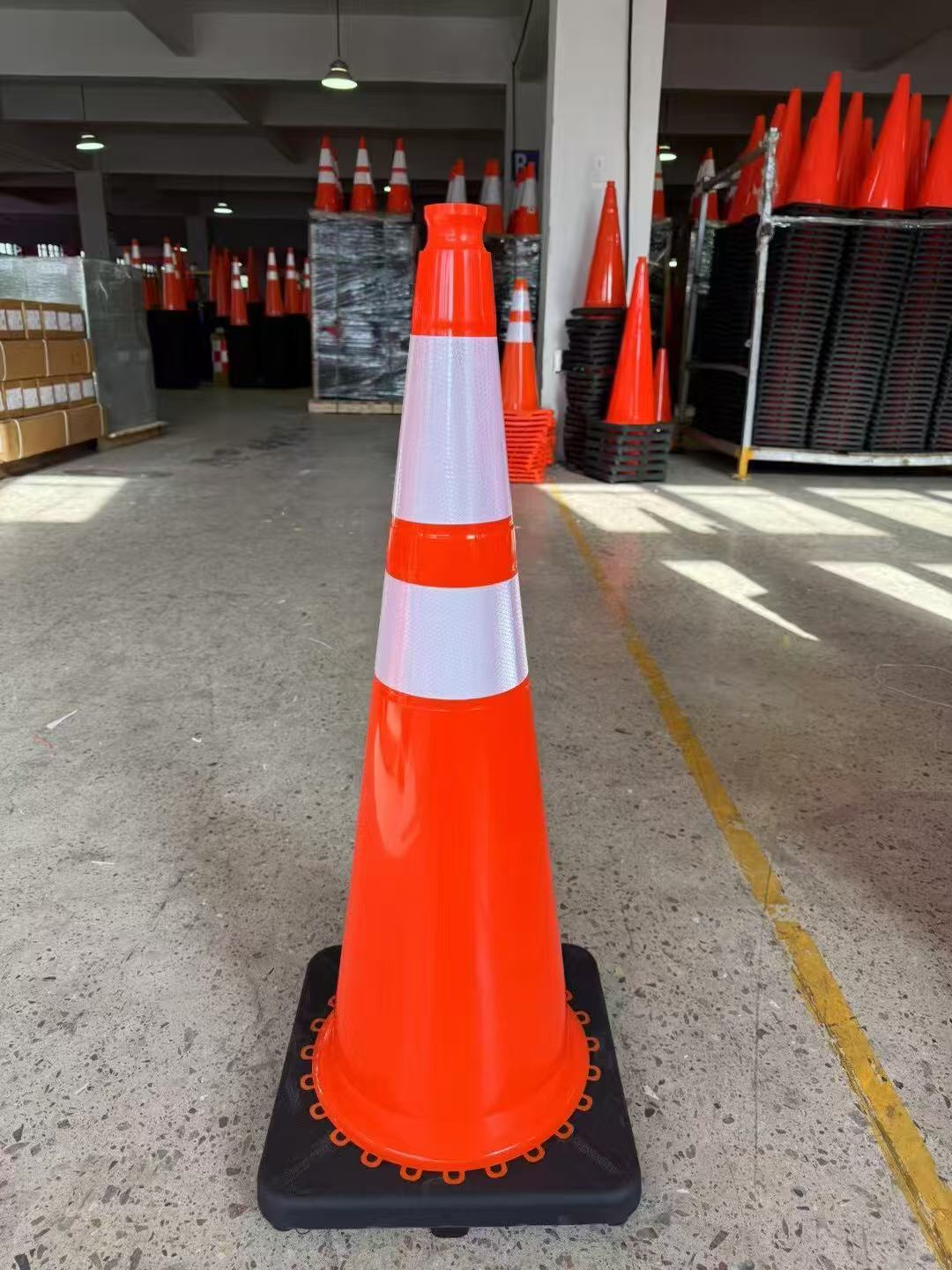
Reflective sheeting configuration
Packaging and container loading quantity
Consistency of specifications across repeat orders
The required specification should reflect the actual climate, application, and project requirements rather than assuming that every South American market has identical needs.
Traffic cones for hot climates should be selected based on verified performance, not appearance or price alone.
For South American distributors, paying attention to UV exposure, shape retention, bending recovery, and practical handling can help identify suitable products before placing a large order.
Etonda supplies traffic safety products for international buyers. Contact our team with your required cone height, target weight, operating conditions, order quantity, and destination market to discuss suitable product configurations.
Consider UV resistance, color stability, shape retention, bending recovery, and suitability for the expected operating temperature.
Possible causes include material softening, unsuitable formulation, or manufacturing issues. The cause should be evaluated through inspection and appropriate testing.
Use an agreed test procedure that specifies the deformation, environmental conditions, recovery period, and acceptance criteria.
No. Price alone does not establish product performance. Buyers should compare actual specifications, sample performance, and relevant test information.
CONTACT US
 Sales manager:Faye
 TEL: 008613182944931
 WhatsApp: 008618662728327
 EMAIL: info@etonda-trafficsafety.com
newsletter
follow us


